Boilers and water heaters, Junkers
Error E9 in Junkersboiler or heater: why the limiter trips (and why it's not the culprit)
If your boiler or water heater has stopped working and is displaying the Junkers (or, on models without a display, the red LED with a second green one, or the indicator light flashing three times), you've probably read the same thing on many websites: "The temperature limiter has tripped, replace it." And that's precisely the last thing you should do. In many cases, the limiter isn't the culprit; it's just a warning sign. It trips because something has caused the water to overheat, and if you replace the part without fixing the underlying issue, the E9 error usually returns within days.
In this guide about the Junkers E9 error, we explain what the limiter monitors, why it usually trips, how to locate the most likely cause starting with what costs nothing, what usually happens in each type of appliance, and when it is necessary to replace a part.
Quick summary
- What E9 usually means: The water in the circuit has exceeded the safety temperature and the limiter (STB) has activated. The appliance will typically shut off the gas and lock out.
- Most common cause in boilers: water is not circulating properly. Low pressure, air in the system, a clogged pump, or closed radiators.
- Most common cause in water heaters: low water flow or limescale in the heating element.
- First: check the pressure gauge. With the boiler cold, it should normally read between 1 and 1.5 bar.
- Wait before reassembling. The limiter needs to cool down; for heaters, it's usually about 10 minutes.
What does the limiter monitor and why does the E9 Junkers error occur?
Inside your Junkers there are usually two temperature sensors. One is the NTC probe, which continuously measures the temperature and tells the hob how much to heat. The other is the safety limiter, a thermal switch that doesn't measure anything: it simply opens when the metal it's mounted on exceeds a fixed temperature (in many Junkers, around 105–110 °C). When it opens, the hob will typically cut off the gas supply and display error code E9.
Consider what this means: if the limiter trips, it's most likely that the normal regulation hasn't prevented overheating. This is usually due to two reasons: either the water isn't dissipating the heat (it's not circulating, or circulating very little), or the NTC sensor is misleading the circuit board, causing it to continue heating uncontrollably.
Boilers: why does water overheat?
In our experience, it's best to check in this order, from free to expensive:
- Circuit pressure. Check the pressure gauge with the boiler cold. If it reads less than 1 bar, there may be insufficient water in the circuit, causing poor circulation and overheating in the heat exchanger. Top up the system using the filling valve until the pressure reaches 1–1.5 bar. If the pressure drops again within a few days, you most likely have a leak or an empty expansion vessel, which is what really needs fixing.
- Closed radiators. This is one of the most overlooked causes. If you have thermostatic radiator valves and all the rooms are heated, the valves close and the water in the boiler has nowhere to go. The same thing happens if you've closed radiators to save money. Open at least a couple of radiators completely and try again.
- Air in the system. After refilling, after a repair, or if you hear gurgling, bleed the radiators, starting with those on the ground floor. A single air bubble in the pump or heat exchanger can be enough to stop the water from circulating at that point.
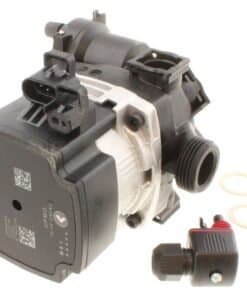
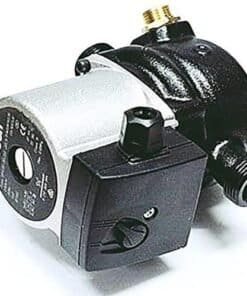
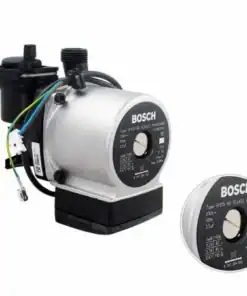
- Blocked pump. This is very common during the first start-up in autumn: the pump sits idle for months, limescale can seize it, and it won't turn. Some boilers have an anti-blocking function, but it's not always enough. If the pump casing is hot and you don't feel any vibration, suspect the pump.
- Flow and return valves. Check that the valves under the boiler are open, especially if someone has carried out a service or replaced radiators.
- Blocked heat exchanger or filter. Sludge and limescale can reduce water flow. If error code E9 appears mainly when heating domestic hot water and not with central heating, it usually points to the plate heat exchanger.
- NTC probe faulty. If the NTC probe measures less than the actual value, the circuit board may overheat. It might not register an error because it's not broken, it's simply giving a false reading. This can be verified by measuring its resistance and comparing it to a thermometer reading.
- Check the circuit board limiter or fuse. Only after checking all of the above. A faulty limiter can display error code E9 even when the boiler is cold; and in some cases, it's also advisable to check the circuit board fuse.
In condensing boilers, E9 may have another cause
In Cerapur, Cerapur Comfort, Cerapur Excellence, and Cerapur Acu boilers, the E9 error code isn't always triggered by the thermal block limiter; it can also be due to the exhaust gas temperature limiter. If the flue gases are too hot, the boiler often displays the same code for protection. This usually indicates that the heat exchanger is dirty on the flue gas side or that the water isn't cooling it sufficiently. In Cerapur and Cerapur Comfort boilers, the installer should also check the differential pressure switch. This is an installer diagnostic task and requires opening the combustion chamber.
Water heaters: E9 is usually related to the water
A water heater doesn't have a closed circuit: cold water enters and hot water comes out. If the water comes out too hot, the limiter cuts off. Typical causes are different:
- Very low flow rate. Tap only half open, dirty inlet filter, tap aerator clogged with limescale, or low mains pressure. The burner heats only a trickle of water and overheats it.
- Limescale buildup in the heating element. In areas with hard water, the coil can become calcified, reducing water flow and creating very hot spots.
- Very high temperature setting combined with mixing a lot of cold water from the tap. Lower the appliance's temperature instead of mixing.
- Incorrect or improperly adjusted gas. For example, with the Celsius Plus, it's important to verify that the appliance is compatible with the installed gas. A natural gas heater running on butane, or vice versa, will have an incorrect flame.
The usual procedure with a water heater is to wait about 10 minutes for the appliance to cool down before turning it back on. If this happens again, you'll need a technician.
If your Junkers doesn't have a screen
- Eurline (ZW…-1): Red LED and second green LED. This usually indicates overheating in the coil, a broken limiter, a seized pump, or air in the system (it is advisable to bleed the system and the boiler's air vent).
- Ceraline Acu (ZWSE 28-5): the indicator flashes three times: most likely the speed limiter acted on the outbound journey.
- Celsius heaters: the appliance does not turn on and the fault LED flashes (on the Celsius Plus it shows E9).
- Ceraclass Midi: "E9" with the rearm symbol usually appears: the cause must be fixed and the system rearmed.
Probable causes of the Junkers E9 error according to the model
- Eur: the limiter has usually been activated. It is advisable to check the NTC input, the pump, the circuit board fuse, and purge the appliance.
- Ceraclass Excellence / Cerastar: limiter activated on the flow line. The usual procedure is to check the system pressure, probe, pump, circuit board fuse, and bleed the system.
- Ceraclass Midi: Overheating with the limiter activated. Check that the template valves are open, the system is purged, and the limiter is connected to its wiring.
- EurAcu-Hit: Primary temperature overrun. Usually, you need to check the 110°C limiter, the primary NTC, the heater core, the pump, and a specific fuse on the board.
- Cerapur, Comfort, Excellence, and Acu: thermal block or exhaust gas restrictor. In many cases, it's necessary to check the operating pressure, the restrictor, the pump, and the circuit board fuses, as well as bleed the system and check the water side of the thermal block.
- miniMAXX, miniMAXX Excellence, HydroPower-Plus, and Celsius water heaters: temperature limiter. It is usually best to wait about 10 minutes and turn it back on; if it happens again, contact technical service.
What you can do (and what you can't)
Safe: Check and refill the pressure, open radiators and valves, bleed radiators, clean the tap aerator, lower the heater temperature and wait for it to cool down before reassembling.
For the installer: unblock or replace the pump, measure the NTC, descale the heat exchanger, check the flue gas condensate side, check the refrigerant level, and replace the pressure regulator. If the Junkers recurs, always contact an authorized technician.
Spare parts related to the E9
Circulation pumps:


Safety limiters and probes:


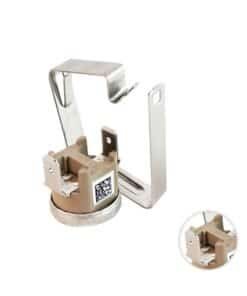
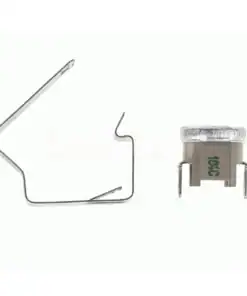
If you suspect the NTC sensor, you'll find all the relevant information in our A7 and E2 error Junkers. And the complete list of spare parts Junkers.
Frequently Asked Questions
Can I bypass the limiter if the JunkersE9 error appears?
No. The limiter is a safety feature: if you disable it, the boiler can overheat uncontrollably, risking serious damage and burns. No reputable technician would do that.
I reset it and it works for a while, then the E9 error returns. What's going on?
This is usually a sign that the water isn't circulating properly: the pressure limiter cools down, you reset it, the boiler heats up, and since the heat isn't being dissipated, it trips again. Check the pressure, radiators, air intake, and pump before checking the pressure limiter.
Why does the E9 error code appear when I turn on the heating in autumn?
Most likely, the pump has been sitting for months and has seized up, or it may have lost some pressure or gotten air in during the summer. Check the pressure gauge and bleed the system first.
What if it only happens when I use hot water, not with the heating on?
It usually points to a calcified domestic hot water heat exchanger or, in water heaters, to a water flow rate that is too low.
Is it related to the EA error?
No, they are different errors: EA usually indicates that the boiler is not detecting a flame, and E9 indicates that the temperature is too high. If you see EA, you can find the EA error Junkers.
Important notice
This article is a guide based on our experience as a spare parts store. It is not a substitute for professional diagnosis. Every appliance and every installation is different, and the same error code can have different causes.
Any work on the gas circuit, combustion, or flue system must be carried out by a qualified installer, in accordance with the Technical Regulation for the Distribution and Use of Gaseous Fuels (RD 919/2006) and the Regulation on Thermal Installations in Buildings (RITE). Manipulating these elements without the necessary qualifications can be dangerous and will void the appliance's warranty.
The decision to purchase a replacement part based on this information is the sole responsibility of the customer. ElectroCholo is not liable for incorrect diagnoses or damage resulting from improper installation. Electrical and electronic parts that have been assembled or installed are non-returnable if the fault turns out to be something else, in accordance with our general terms and conditions.
