Boilers and water heaters, Junkers
A7, E2, E4, Ad and A9 errors in Junkers: how to know if it is the NTC probe or the cable
Your Junkers is displaying A7, E2, E4, Ad, or A9, and it all points to the same problem: a faulty temperature sensor. If you've received the A7 error code Junkers, the temptation is to order a replacement sensor, which is inexpensive. However, there's a detail that almost no one mentions: often the sensor itself is fine, and the problem lies with the cable, the connector, or how it's mounted. If you replace the sensor without checking these issues, the error code may reappear.
In this guide we explain what an NTC probe is, what each code usually indicates in each Junkersfamily, how to check in five minutes with a multimeter whether the problem is with the probe or the cable, and what usually happens in practice according to our experience in the store.
Quick summary
- A7: usually indicates a problem in the domestic hot water probe (in water heaters, the outlet probe).
- E2: usually points to the heating flow probe in boilers, or the inlet probe in some heaters.
- E4 / Ad: in many cases they are related to the cold water or solar inlet probe (E4) and to the accumulator probe (Ad).
- A9: The probe is most likely working but is incorrectly mounted and measuring incorrectly.
- First: check the connector and cable before the probe. A corroded connector or a frayed cable can produce the same code.
What is an NTC probe and how does it "break"?
NTC stands for "negative temperature coefficient": it's a resistor whose resistance decreases when heatedcircuit board Junkers applies a small voltage to it, measures the resistance, and translates it into degrees. This is how it knows how much to heat.
What's interesting is how it detects a fault. The board doesn't know if the probe is "bad": it only sees impossible values. If the resistance is infinite, it will most likely interpret that the circuit is open (broken probe, cut wire, or loose connector). If it's almost zero, it usually interprets that it's shorted (punctured probe, exposed wire touching ground, moisture in the connector). Therefore, when faced with a Junkers and similar ones, the usual approach is to check for continuity or a short circuit in the probe and the connecting wire: the code doesn't distinguish between the probe and the wire.
Which probe usually corresponds to each code ( Junkers error A7 and others)
JunkersA7 error: which probe usually indicates
- Cerapur, Comfort, Excellence, Acu and Ceraclass Excellence (ZWC) boilers: this is usually the domestic hot water temperature probe.
- Ceraclass Midi: in many cases, faulty domestic hot water NTC.
- Eur: This may be due to an interrupted or shorted NTC; check the probe and cable.
- EurAcu-Hit: usually related to the primary output NTC of the accumulator.
- miniMAXX, HydroPower-Plus, and Celsius Plus heaters: the most likely cause is a shorted or open NTC output sensor. In the miniMAXX, this usually causes the unit to shut down. In the miniMAXX Excellence, it's common to start by checking the sensor connections.
E2
- Boilers: This usually indicates a problem with the heating flow temperature sensor (primary NTC). It's advisable to check the sensor and the cable.
- HydroPower-Plus and miniMAXX Excellence water heaters: this may be due to a defect in the water inlet NTC probe.
E4 and Ad
- Cerapur Acu: E4 is usually related to the cold water probe.
- Eur: The E4 error code usually indicates a problem with the preheated water inlet NTC sensor of the solar kit. Note the nuance: in these cases, the usual solution is not to replace the sensor, but to check the 24V fuse. It's a minor fault that many people mistake for a sensor issue.
- Ad (boilers with storage tank): This usually means that the storage tank probe is not being detected. There's a curious case with the Cerapur Excellence: the probe may have been detected as a BUS user and "switched out." In this situation, the solution is usually not a replacement part, but rather resetting the Heatronic 3 to its factory settings (service function 8.E) and reconfiguring the regulation, something best left to a technician.
A9: The probe works, but it measures incorrectly
This is the most treacherous code. On the Ceraclass Excellence and Cerapur Acu, it usually indicates that the hot water sensor is incorrectly installed. These sensors are attached to a pipe and transmit heat using thermal paste. If the paste has dried out, is missing, or the sensor has shifted, it will measure less than the actual temperature. On the Ceraclass Excellence, the usual solution is to reinstall it with thermal paste, and on the Cerapur Acu, check the mounting location. In many cases, a new part is not necessary.
In water heaters, the A9 has other nuances: in the miniMAXX Excellence it may also be due to very low water inlet pressure, and in the Celsius Plus it usually appears flashing without blocking the appliance; it is advisable to check the NTC assembly and the gas pressure.
If your Junkers doesn't have a screen
- Eurline: Red LED with the third and fifth green: usually indicates an open or shorted primary NTC. Red LED with the fourth and fifth green: usually indicates an open or shorted hot water NTC.
- Ceraline Acu: If the indicator light flashes twice, it is most likely that the temperature sensors are broken or short-circuited.
How to tell if it's the probe or the cable (with a multimeter)
If you have a multimeter and some basic electrical skills, this check will save you from buying blindly. With the boiler unplugged from the power supply:
- Check the connector. Look for algae, rust, burnt plastic, or a bent pin. Disconnect and reconnect firmly. Sometimes that's all it takes.
- Measure the probe with it disconnected. Set the multimeter to ohms on both terminals of the probe. If it reads infinity (or "1" on the display), it's most likely open. If it reads practically zero, it's usually shorted. In both cases, it's normal to replace it.
- Test the heat. If the reading is reasonable, hold the probe in your hand or heat it with a hairdryer while taking the measurement. The reading should decrease gradually. If it jumps to unusual values, it's likely faulty.
- Measure the cable. If the probe is working correctly, measure from the other end of the cable (at the circuit board). If you don't see the same reading there, the problem is usually in the cable or a splice.
- Compare this to the resistance curve of your probe. Each NTC model has its own resistance curve according to temperature, which you should consult with a technician about. If the probe gives a value significantly different from the actual temperature, it is likely measuring incorrectly, even if it is not broken.
Note: A probe that "measures incorrectly" without being broken usually doesn't trigger any probe codes, but it can cause other problems. If it measures less than the actual temperature, the boiler may overheat and eventually display error code E9. If it measures more than the actual temperature, the water may come out lukewarm.
What you can do (and what you can't)
With minimal risk and the boiler disconnected from the mains: check visible connectors, measure resistances and observe if there is moisture or dripping on the plate or cables.
For the installer: Anything that involves opening the watertight chamber, draining the circuit to change immersion probes, or tampering with the electronic board. If the Junkers persists after these checks, contact an authorized technician.
Junkers NTC probes in stock

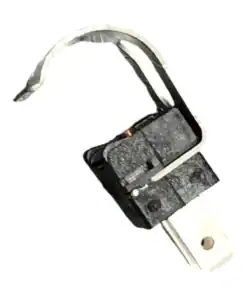
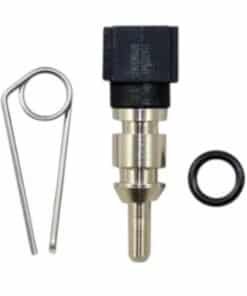


Always check the reference number on your appliance's rating plate. Don't see yours? Browse spare parts Junkers or contact us with the exact model number.
Frequently Asked Questions
Can I continue using the boiler with the JunkersA7 error?
It depends on the model. In many boilers, error code A7 only affects domestic hot water, and the heating usually continues to function; in water heaters like the miniMAXX, it typically shuts down the entire unit. In any case, it's best to have it repaired as soon as possible.
I changed the sensor and the same code is still appearing. Why?
The problem was most likely with the cable, the connector, moisture, or the circuit board. That's why it's worth taking measurements before buying.
Will any NTC probe work, even if it's from another brand?
Generally, no. Each manufacturer typically uses a specific resistance curve and mounting type (contact, immersion, clip-on). A probe with a different curve can cause the boiler to give inaccurate readings.
What is the probe's thermal paste and is it necessary to apply it?
It's a paste that improves the contact between the probe and the pipe. It's highly recommended for contact probes: without it, the probe tends to under-measure and error code A9 may appear.
What if I get EA or E9?
They are usually different faults: you have the guides for error EA (no flame detected) and error E9 (overheating).
Important notice
This article is a guide based on our experience as a spare parts store. It is not a substitute for professional diagnosis. Every appliance and every installation is different, and the same error code can have different causes.
Any work on the gas circuit, combustion, or flue system must be carried out by a qualified installer, in accordance with the Technical Regulation for the Distribution and Use of Gaseous Fuels (RD 919/2006) and the Regulation on Thermal Installations in Buildings (RITE). Manipulating these elements without the necessary qualifications can be dangerous and will void the appliance's warranty.
The decision to purchase a replacement part based on this information is the sole responsibility of the customer. ElectroCholo is not liable for incorrect diagnoses or damage resulting from improper installation. Electrical and electronic parts that have been assembled or installed are non-returnable if the fault turns out to be something else, in accordance with our general terms and conditions.
