Boilers and water heaters, Junkers
Junkerserror codes C6, C4 and C1: pressure switch, fan or chimney (how to know which one is faulty)
C6 error Junkers (or C4, C1, C2, or C7) usually appears when the boiler shuts down, the fan makes a noise, but it doesn't restart. Almost everything you find says "pressure switch faulty." But the pressure switch is only the one that triggers the warning: in our experience, in most cases the problem lies in the pipes, the chimney, or the fancondensing boilers Junkers, the C6 error usually points to the fan, not the pressure switch.
In this guide we explain what the pressure switch does, what each code usually indicates depending on your model, what to check before buying anything, and which parts are usually responsible.
Quick summary
- C6 in sealed boilers and water heaters: the pressure switch is most likely not closing. The boiler is not detecting that the fan is venting the flue gases.
- C6 on condensing boilers (Cerapur): This usually indicates that the fan is not working. It's advisable to check its cable, plug, and the fan itself.
- C4: usually indicates that the pressure switch does not open with the fan stopped (it is "stuck").
- C1 / C2: usually indicate that the pressure switch opens during full operation (the fumes stop coming out properly).
- First: check the flue to the outside and the silicone tubes of the pressure switch.
What does the pressure switch do?
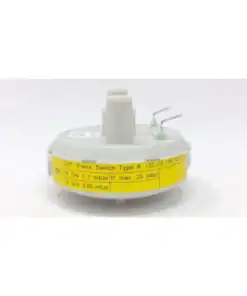
In sealed or forced-draft boilers and water heaters, a fan pushes the flue gases outside. Before turning on the gas, the hob needs to know that the fan is actually working and that the flue isn't blocked. That's what the differential pressure switch: a small switch with a diaphragm, connected to the flue circuit by one or two silicone tubes. When the fan blows and creates the appropriate pressure difference, the diaphragm moves and the contact closes. The hob then understands, "Everything's fine, I can turn on the gas."
The logic of the board is simple and is usually reflected in the codes:
- With the fan stopped, the pressure switch must be open. If it isn't, the circuit board interprets it as stuck or bridged: it will usually display C4.
- With the fan running , it must close . If it doesn't close, error code C6 will most likely appear .
- If it closes but opens while in full operation, C1 (in some heaters, C2).
Before blaming the pressure switch: what usually goes wrong with the Junkers C6 error
- The flue. Bird nests, leaves, a sooty grate, a crushed facade fitting, or a dislodged duct. If the smoke isn't escaping, the pressure difference isn't reaching the building. Check the fitting from outside the house.
- Wind. If C1 or C6 errors appear mainly on windy days, the flue terminal may be incorrectly positioned or require a deflector. In these cases, it is usually not a boiler malfunction.
- Silicone tubing. It's the classic thing no one pays attention to. It cracks with heat, fills with condensation, or gets dirty inside. In Eurappliances, for example, it's common to find the pressure switch's pressure ports dirty. A single drop of water in the tubing can be enough to trigger a C6 error code.
- The tubes have been switched. After an inspection, if someone connects them backwards, the pressure switch may never register the correct pressure.
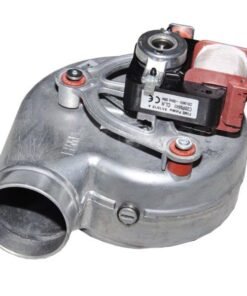
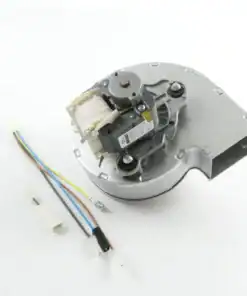
- Weak fan. If it spins but slower than before (worn bearing, dirt on the blades, damaged diaphragm), it may not be creating enough pressure. This is usually indicated by a different, deeper, or whirring noise.
- Low voltage. Some Eurdisplay a specific code, UU, which is usually associated with low voltage (below 185V). With low voltage, the fan may rotate slowly. If the light is flashing in your home or your boiler is connected to a long circuit, be aware of this.
- The pressure switch. Now we're talking. Perforated diaphragm or stuck contact. Typical of the C4.
- Wiring or motherboard. Last, and only if everything else is okay.
Junkers C6 error depending on the model: what it usually indicates
Sealed boilers: EurMFA, Ceraclass Excellence, Ceraclass Midi AE and Eur
- Eur(MFA versions): Typically, C1 indicates a pressure switch that activates during operation; C4, a pressure switch that doesn't open when at rest; C6, a pressure switch that doesn't close; and C7, a missing fan speed signal. It's advisable to check the pressure switch, extractor fan, tubing, and electrical connections.
- Ceraclass Excellence / Cerastar: C1, C4, and C6 are usually related to the differential pressure switch. It is standard practice to check the pressure switch, its wiring and hoses, the fan and its ducts, and the exhaust duct.
- Ceraclass Midi (AE): C1, C4, and C6 usually have a reset symbol. The most common troubleshooting steps are to check the electrical and pneumatic connections of the pressure switch and ensure there are no obstructions in the gas extraction system.
Condensing boilers: Cerapur, Comfort, Excellence and Acu
Here, the C6 code usually indicates that the fan isn't working. The best course of action is to check the fan cable, the plug, and the fan itself, and replace them if necessary. These boilers typically regulate the gas and air mixture by controlling the fan speed, so they don't rely on a pressure switch like traditional sealed boilers. If you're looking for a pressure switch for a Cerapur boiler with a C6 code, you're likely looking for the wrong part.
Heaters
- miniMAXX Excellence: C2 usually indicates that the pressure switch opens during operation (it is advisable to check the gas outlet and remove dust or particles); C4, that it does not open (pressure switch, cables and chimney connections); and C6, that it does not close the circuit (gas outlet and pressure switch connections).
- Celsius / Celsius Plus: If the appliance does not turn on and the fault LED is illuminated (C4, C6 on the Celsius Plus), it is advisable to also check the water inlet filter and the flow sensor, in addition to the pressure switch. In other words, a dirty water filter can produce the same symptom. If it shuts off and locks up while running (C2), the most likely issues are the flue, the condensate drain, and the pressure switch and its associated pipes.
If your Junkers doesn't have a screen
- Eurline (ZW…-1): Red LED with the second and fifth greenLEDs: This usually indicates poor gas evacuation. Common causes include a faulty pressure switch, dirty pressure taps, a fan that is not rotating, and a faulty AGÜ probe.
- Ceraline Acu MFA: If the indicator light flashes four times, it is usually a pressure switch that does not open, does not close, or activates while in operation.
What you can do (and what you can't)
Safe to check: look at the flue from the outside, see if the problem coincides with windy days, clean the water inlet filter in water heaters, and check if the fan sounds different.
For the installer: Open the boiler to check the pipes and pressure switch, remove the fan, and perform any work on the flue. Proper flue gas evacuation is a safety feature: a combustion gas leak in the home is dangerous.
Related spare parts
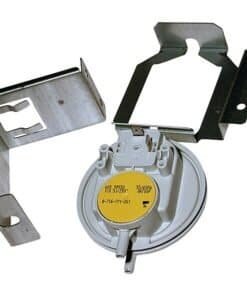
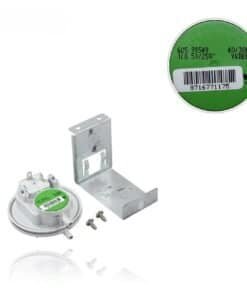
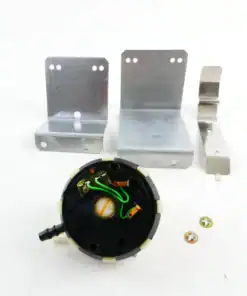
Pressure switches:


Fans:


Always check the reference number on your rating plate. More parts available at spares Junkers.
Frequently Asked Questions
Can I bypass the pressure switch to get around this?
No, never. The pressure switch is what prevents the boiler from turning on if the flue gases aren't escaping. Bypassing it can fill your house with combustion gases, including carbon monoxide.
Why do I only get the Junkers C6 error when it's windy? Is the boiler broken?
Probably not. Wind can create backpressure at the flue outlet. An installer can assess whether to move the terminal or install a deflector.
I've replaced the pressure switch and it's still showing C6. What else can I do?
The most common problem lies in the small pipes (water inside, cracks, poor connections), the flue, a weak fan, or, lastly, the cooktop. Therefore, it's advisable to check all of these before buying.
The fan is making a strange noise, could that be related?
It's quite likely. A fan with worn bearings or dirty blades usually rotates more slowly and doesn't generate the pressure the pressure switch needs.
Are there more Junkers codes explained?
Yes: you have the guides for error EA, error E9 and NTC probes (A7, E2), and the error codes Junkers.
Important notice
This article is a guide based on our experience as a spare parts store. It is not a substitute for professional diagnosis. Every appliance and every installation is different, and the same error code can have different causes.
Any work on the gas circuit, combustion, or flue system must be carried out by a qualified installer, in accordance with the Technical Regulation for the Distribution and Use of Gaseous Fuels (RD 919/2006) and the Regulation on Thermal Installations in Buildings (RITE). Manipulating these elements without the necessary qualifications can be dangerous and will void the appliance's warranty.
The decision to purchase a replacement part based on this information is the sole responsibility of the customer. ElectroCholo is not liable for incorrect diagnoses or damage resulting from improper installation. Electrical and electronic parts that have been assembled or installed are non-returnable if the fault turns out to be something else, in accordance with our general terms and conditions.
